
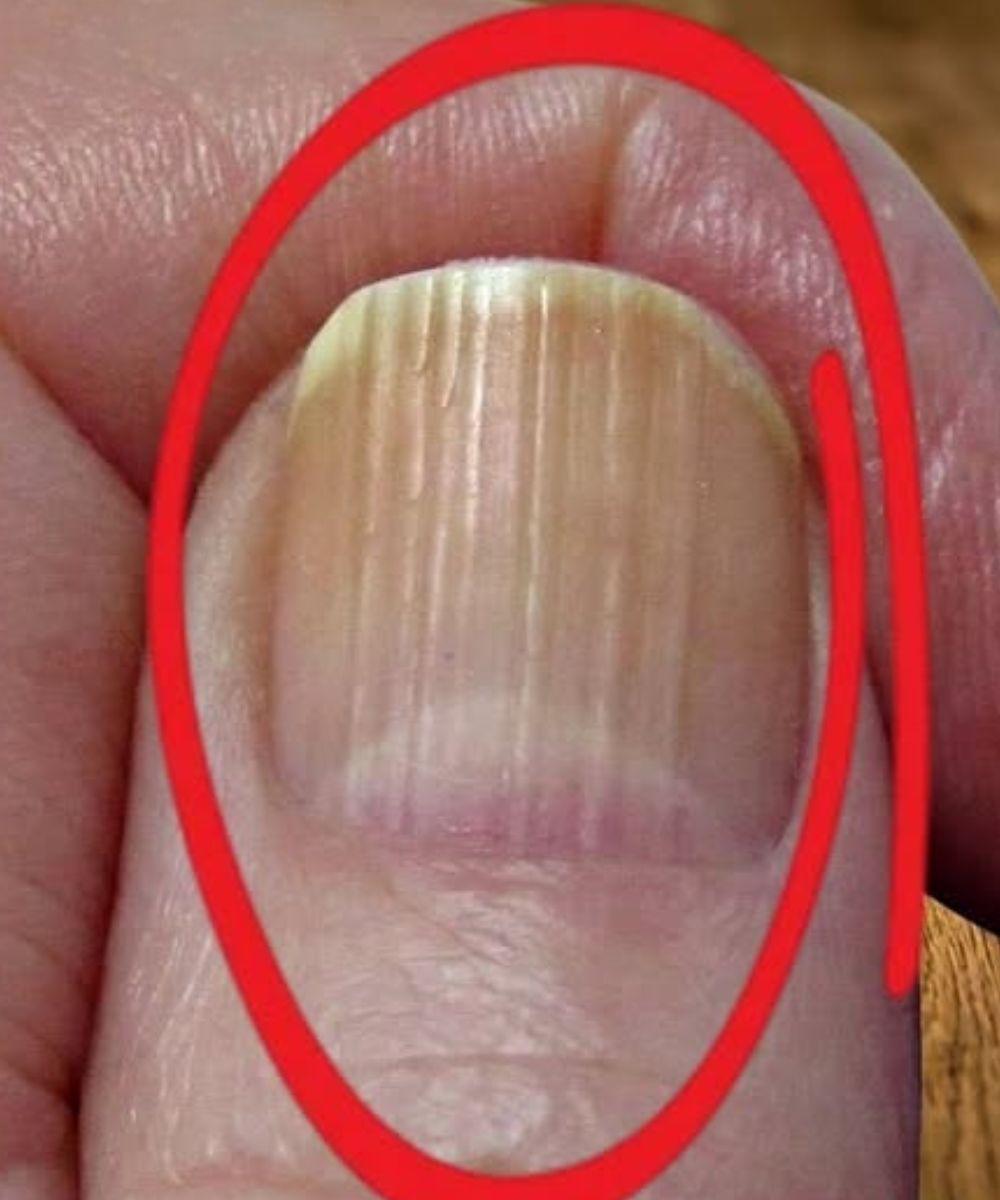
If you’ve ever looked down at your hands and noticed thin vertical lines running from the base of your nails to the tip, you’re definitely not alone. For many people, these ridges seem to appear gradually over time, often becoming more noticeable with age.
Some people immediately worry that the lines signal a serious health problem, while others assume they are simply cosmetic changes. In reality, the answer is usually much less dramatic — and surprisingly common.
These lines are known as longitudinal ridges, and in most cases, they are considered a completely normal part of aging.
Much like wrinkles forming on the skin or hair gradually turning gray, nails also change as the body gets older.
The ridges appear as raised lines that travel vertically from the cuticle toward the tip of the nail. Some are barely visible, while others become more pronounced over time. They often start subtly and slowly deepen after the age of 40.
Unlike horizontal ridges — which can sometimes indicate illness, physical stress, or trauma to the nail — vertical lines are usually harmless.
One major reason is the body’s natural decline in keratin production.
Keratin is the protein responsible for keeping nails strong, smooth, and resilient. As people age, the body produces less oil and protein overall, which can leave nails thinner, drier, and more textured than they once were.
Reduced hydration inside the nail plate can make these ridges stand out more clearly.
Aging can also slightly affect blood circulation, meaning nutrients may not reach the nail matrix as efficiently as before. Since the nail matrix is responsible for producing new nail cells, even subtle changes there can alter the nail’s appearance over time.
For most people, vertical ridges are simply another visible reminder that the body changes with age.
However, there are situations where nail changes deserve closer attention.
If the ridges suddenly appear very quickly, become unusually deep, or are accompanied by dark streaks, severe brittleness, splitting, or changes in nail shape, it may signal something beyond normal aging.
In some cases, nail abnormalities can be linked to vitamin deficiencies, dehydration, thyroid problems, anemia, or other health conditions.
That doesn’t mean every ridge is dangerous.
But it does mean sudden or dramatic changes shouldn’t automatically be ignored.
Doctors often describe nails as small windows into overall health because they can sometimes reflect what’s happening inside the body long before other symptoms appear.
Fortunately, there are several simple ways to support healthier-looking nails as they age.
Hydration plays a major role. Drinking enough water helps maintain moisture throughout the body, including the nails.
Cuticle oils and vitamin E treatments can also help soften dryness and reduce the rough appearance of ridges. Many dermatologists recommend applying nail oil regularly, especially after washing hands frequently or using harsh cleaning products.
Nutrients like biotin, zinc, iron, omega-3 fatty acids, and protein all contribute to healthier nail growth. When the body lacks essential nutrients, nails are often among the first places where subtle changes become visible.
Limiting harsh nail polish removers and strong chemicals can also help prevent further drying and weakening.
Some people lightly buff the nail surface to smooth the ridges temporarily, though experts caution against excessive buffing because it can thin the nails even more over time.
Ultimately, vertical nail ridges are usually not something to fear.
They are often simply part of the body’s natural aging process — small signs that the years are moving forward, even in places people rarely think to look.
And while smooth nails may be associated with youth, textured nails are incredibly common and, in most cases, completely harmless.
Still, paying attention to changes in your nails is worthwhile.
Sometimes the smallest details quietly reveal the most about overall health.