
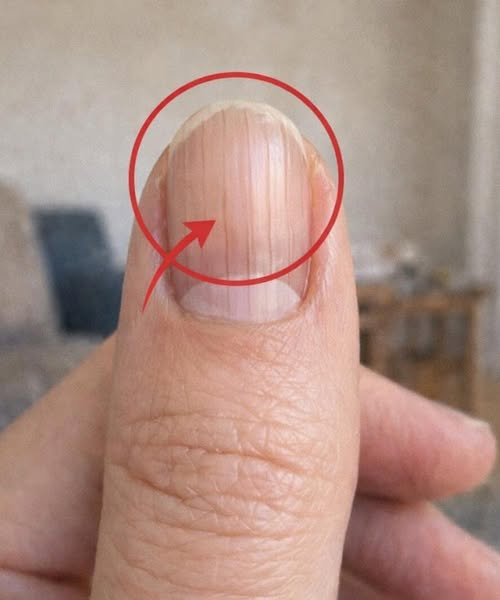
Discussions about aging often point to unexpected indicators in the body, and fingernails are one of them. Researchers like David Sinclair have highlighted how nails can offer subtle clues about overall health. One of the most important factors is how fast they grow. Faster nail growth generally reflects active cell regeneration, while slower growth can suggest a gradual decline in that process. Research from the late 1970s showed that fingernail growth tends to slow slightly each year after the age of thirty. While this doesn’t determine lifespan, it can provide insight into biological age—how efficiently the body is functioning internally compared to actual age.
Beyond growth rate, the appearance of fingernails can also signal underlying conditions. Certain visible changes may require medical attention. For example, dark vertical streaks should be checked to rule out serious conditions such as melanoma. Small dents or pitting can be associated with psoriasis. A rounded enlargement of the fingertips, known as clubbing, may point to long-term heart or lung issues. Pale or white nails can sometimes indicate anemia or liver problems, while a bluish tint may suggest reduced oxygen levels in the blood. Yellow nails are often linked to fungal infections, though in some cases they may reflect broader health concerns.
At the same time, many nail changes are harmless and temporary. Daily habits can easily affect how nails look and feel. Frequent handwashing or exposure to cleaning products can dry them out, while minor injuries or nutritional gaps may leave temporary marks. Brittle or peeling nails are common and are usually caused by dryness rather than serious illness. Interpreting every small change as a major health warning would be an oversimplification of how the body works.
If something unusual appears, it’s best to observe patterns over time rather than react to a single change. Small spots or minor variations are often insignificant, but ongoing discoloration or shape changes deserve attention. It’s also useful to consider recent lifestyle factors, such as stress, diet, or new medications. When symptoms persist, consulting a healthcare professional remains the most reliable approach. Fingernails don’t predict the future, but they can reflect aspects of your current health and help guide more informed decisions.