
Country music has lost one of its most unmistakable voices.
David Allan Coe, the outlaw country icon behind classics like “You Never Even Called Me by My Name,” has died at 86.
His passing was confirmed by Rolling Stone on Wednesday, April 29, though no cause of death had been announced at the time.
Born on September 6, 1939, in Akron, Ohio, Coe’s early life was anything but conventional. He spent much of his youth in and out of correctional facilities, experiences that would later shape the rebellious, outsider image that defined both his life and his music.
His musical style blended elements of blues, rock, and country, and his voice was often described as a deep, raspy baritone.
When he arrived in Nashville in 1967, success didn’t come overnight — but it came. Coe first made waves as a songwriter, landing a major hit when Tanya Tucker took “Would You Lay With Me (In a Field of Stone)” to No. 1 in 1973.
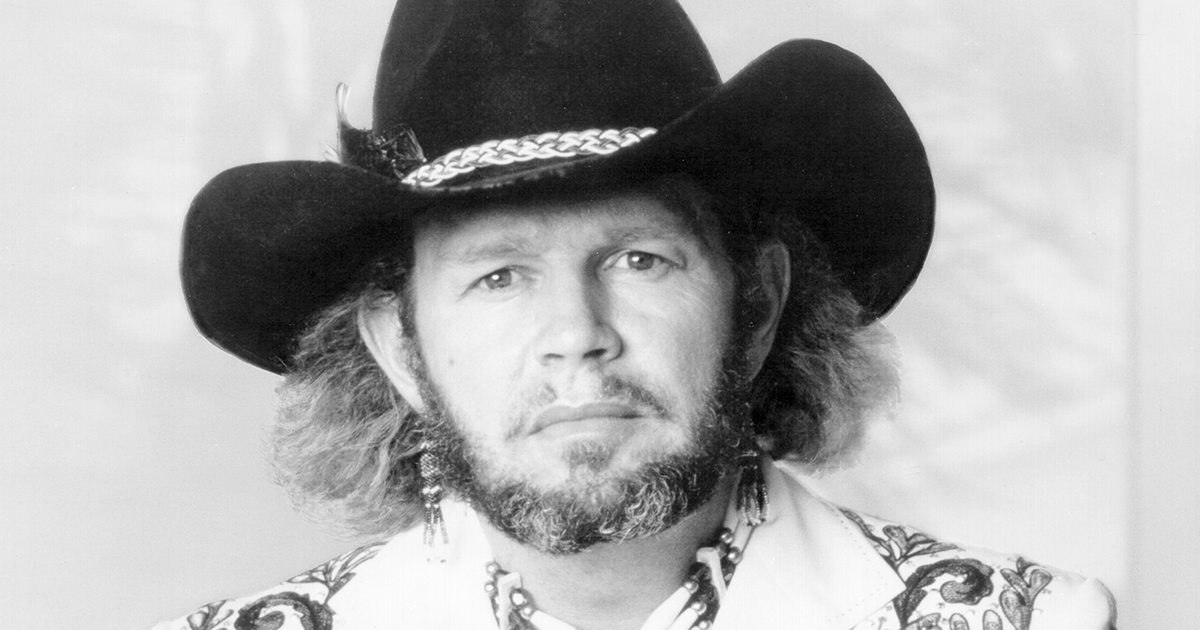
David Allan Coe (Michael Ochs Archives/Getty Images
That breakthrough opened doors, earning him a deal with Columbia Records.
By 1974, Coe stepped fully into the spotlight with his debut album The Mysterious Rhinestone Cowboy. A year later, his album Once Upon a Rhyme delivered what would become his signature song: “You Never Even Called Me by My Name.” The track, filled with humor and self-awareness, famously includes the spoken line where Coe calls it “the perfect country and western song.”
He even wrote himself into his own legend, singing, “But the only time I know I’ll hear ‘David Allan Coe’ / Is when Jesus has His final judgment day.”
That self-referential style carried through much of his work, including songs like “Longhaired Redneck,” “Willie, Waylon and Me,” and “Son of the South.”
Though his biggest commercial success came in the 1970s, Coe proved his staying power. In 1983, he staged a comeback with Castles in the Sand, featuring the fan-favorite track “The Ride.”
His influence stretched far beyond his own recordings. Coe also penned “Take This Job and Shove It,” a No. 1 hit for Johnny Paycheck that became a blue-collar anthem.
Even in his later years, Coe never stepped away from the stage, continuing to release music and perform for devoted fans.
David Allen Coe performs to a sold out crowd during Willie Nelson’s 4th of July Picnic at The Backyard on July 4, 2010 in Austin, Texas. (Photo by Gary Miller/FilmMagic)
But his legacy is complex. Coe drew heavy criticism for controversial material in albums like Nothing Sacred (1978) and Underground Album (1982), which included racial slurs and misogynistic language. He later defended the work as parody, though the backlash never fully faded.
He also faced legal troubles later in life. In 2015, Coe pleaded guilty to obstructing IRS laws and was sentenced the following year to three years of probation, along with nearly $1 million in back taxes.
On the personal side, Coe married his sixth wife, Kimberly Hastings, in 2010. He is survived by her and his children.