
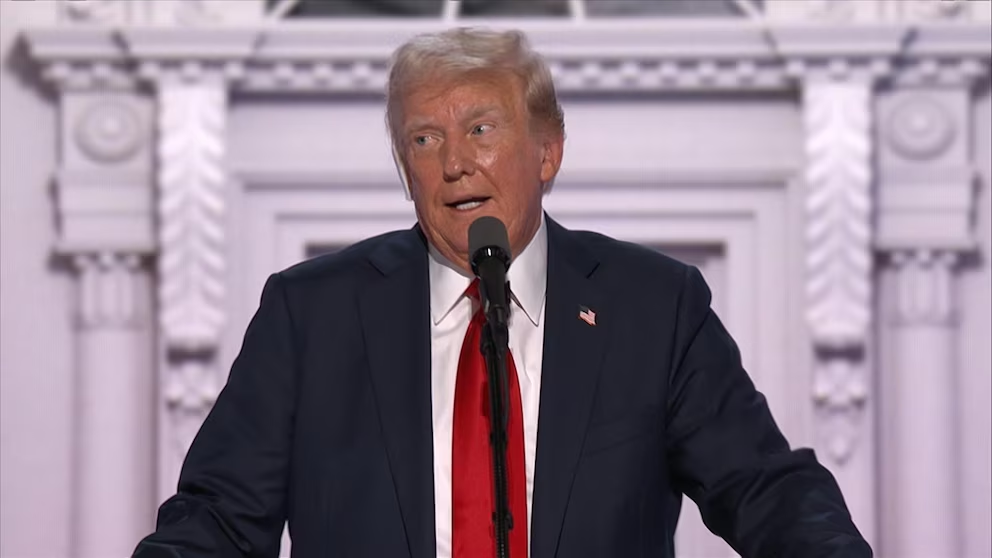
The White House has issued a full update on President Donald Trump’s health, confirming that diagnostic imaging ordered in October revealed no serious medical problems. The MRI and accompanying scans, described by officials as “preventive,” showed no signs of disease in his heart, blood vessels or major abdominal organs. The assessment aims to end weeks of speculation and provide clarity about the 79-year-old president’s fitness for office.
White House Press Secretary Karoline Leavitt addressed reporters, emphasising that the imaging had been recommended solely on the basis of the president’s age as part of routine long-term health monitoring. According to the summarised findings prepared by the White House physician, the heart and major blood vessels appeared normal, with smooth and healthy vessel walls, no narrowing that might impede blood flow, and no evidence of inflammation or clotting. The heart chambers were of normal size, and scans of the abdomen confirmed that all major organs were well perfused and structurally sound.
The disclosure comes after Trump had initially confirmed in late October that he underwent an MRI examination during a visit to Walter Reed National Military Medical Center, but he declined to say which part of his body had been scanned or why the test was carried out. At the time, the White House described the visit as part of a routine physical and stated that the president remained in “exceptional health” for someone of his age. No details about advanced imaging were provided initially. The fuller description delivered in the December memo and accompanying press briefing now offers the most comprehensive account to date.
The update follows a tense exchange aboard Air Force One at the end of November, where reporters pressed Trump to explain why the scan had been ordered and whether results would be released. Trump told one female journalist that he had “no idea” which part of his body had been scanned. When asked if the MRI had involved his brain, he said no, claiming that he had instead completed a cognitive exam which he said he “aced,” and added that the reporter could never have done so. The remarks prompted criticism from press freedom and women’s advocacy groups.