
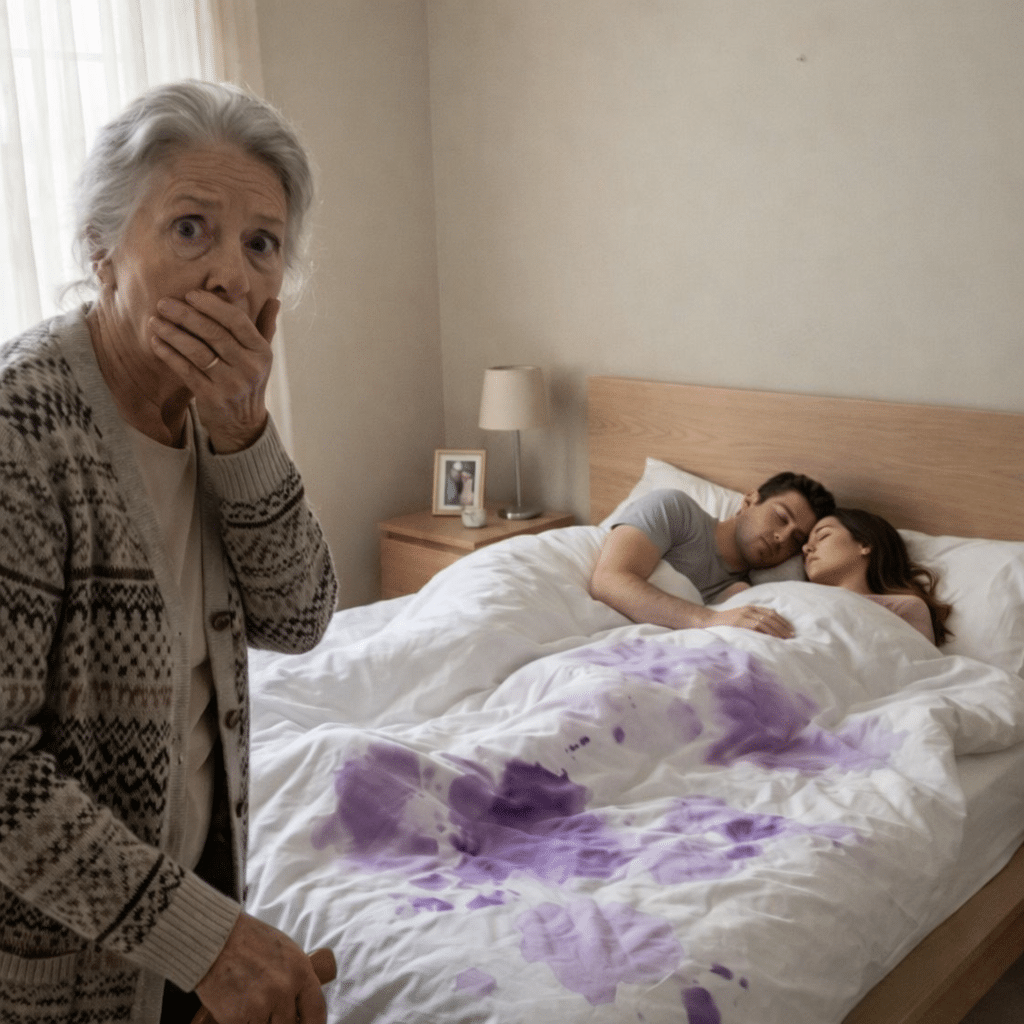
The wedding had barely ended when Mrs. Reyes collapsed onto the bed without even taking off her apron.
Her body ached from head to toe. Her feet burned. Her shoulders throbbed. The house still smelled of oil, perfume, and too many people. The kitchen was a disaster, the floor was sticky, and every surface seemed to carry the fingerprints of celebration.
But rest, in that house, never lasted long.
At five in the morning, she was awake again.
By six, she was already in the kitchen, scrubbing pots with stiff fingers. By eight, she was sweeping corners, wiping tables, and muttering to herself about crumbs, stains, and lazy guests who left a mess behind. By eleven, her back was bent, her temper was rising, and one thought had begun repeating in her head like a drumbeat.
Mrs. Reyes wiped her forehead with the edge of her sleeve and stared up the staircase.
“Daughter-in-law!” she shouted. “Come down and prepare the food!”
Her feet hurt too much to keep climbing those stairs over and over, and anger gave her the strength exhaustion had taken away. She grabbed a stick from the kitchen corner and marched upward, step by furious step, muttering all the way.
“What kind of daughter-in-law sleeps this late? Newly married and already lazy…”
The room was cold and dim. The curtains were only half open. Mia lay under the blanket, completely still.
Mrs. Reyes strode to the bed, breathing hard, and yanked the blanket back.
The white sheets were soaked in dark red.
The stick slipped from her hand and hit the floor with a dull crack.
Mia lay motionless, her face pale as paper. Her lips were dry and cracked. Sweat clung to her forehead despite the chill in the room. Her breathing was shallow, so faint it barely seemed real.
“Mia!” Mrs. Reyes cried, grabbing her shoulders. “Wake up!”
In the corner of the mattress, near Mia’s hand, were empty blister packs of medication.
Mrs. Reyes felt her heart begin to pound so violently it hurt. She reached for Mia’s wrist with trembling fingers.
She stumbled backward and screamed down the hall.
Carlo came running upstairs and froze at the doorway.
For one stunned second, he just stared at the bed.
At his mother standing there white-faced and shaking.
“I thought she was just sleeping,” Mrs. Reyes choked out. “I only came to wake her—”
He rushed forward, scooped Mia into his arms, and nearly stumbled under the dead weight of her body.
Minutes later, flashing lights filled the street outside. Neighbors gathered near their gates in house clothes and slippers, whispering to each other as the paramedics hurried in.
“Looks like the mother-in-law started her discipline early.”
And for the first time in years, she had no answer ready.
At the hospital, Mia was rushed straight into emergency care.
Carlo sat outside the treatment room trembling so hard his knee bounced uncontrollably. His hands were stained, and he kept rubbing them against his jeans as though he could erase what had happened.
“This is my fault,” he whispered. “I never even asked why she wouldn’t wake up…”
His mother stood a few feet away, crying openly now.
Carlo turned toward her so fast that she actually stepped back.
“Lazy?” he said, his voice breaking with anger. “She wakes up before sunrise every day to clean with you. She’s been exhausted for months. Did you ever once ask if she was okay?”
Mrs. Reyes opened her mouth, but no words came.
Just then, a doctor stepped into the waiting area.
The doctor took a slow breath, and Carlo knew before he spoke that the news would change something forever.
“She has severe blood loss,” the doctor said. “And…”
Carlo looked as though the floor had given way beneath him.
“But now,” the doctor continued carefully, “the pregnancy is in critical condition.”
Only a week earlier, Mia had touched her stomach and said in a small voice, “Carlo… my stomach hurts.”
And he had answered without even looking up, “Just endure it. Ma doesn’t want the work to stop.”
The memory hit him so hard he slammed his fist against the wall.
“What kind of husband am I?” he whispered.
The doctor continued, quieter now but no less serious.
“There’s something else you need to know. This is not her first loss. She has had two miscarriages before. This is her third pregnancy.”
Mrs. Reyes staggered back and pressed a hand over her mouth.
The doctor turned to her with a look that was not cruel, but sharp enough to hurt.
“Many women don’t speak up,” he said. “Because no one gives them space to.”
Carlo remembered the rhythm of their household with sudden, brutal clarity.
“In this house, daughters-in-law don’t rest.”
And through it all, Mia had obeyed quietly.
But because she had learned that silence was safer than resistance.
When Mia finally regained consciousness, she looked fragile enough to break with a whisper.
Her voice barely rose above the sound of the monitor.
“I’ve been enduring… I thought things would get better…”
Mrs. Reyes dropped to her knees beside the bed.
“I became the person I once hated,” she whispered.
Carlo looked at her, confused through his anger.
“When I married into this family,” she said, crying now, “your grandmother treated me the same way. She worked me until I bled. She called me lazy if I sat down. I promised myself I would never become like her.”
A nurse stepped in and gently raised a hand.
But the damage had already been done. The stress had not begun in that room. It had been building for months, maybe years, in the daily cruelty of expectations no one questioned.
The next day, the doctor called Carlo aside into the hallway.
“We found evidence that she had recently taken hormonal medication. It should never be given to a pregnant woman without medical supervision.”
He turned and found his mother standing by the corridor window.
“I thought it was a tonic,” she whispered. “A neighbor recommended it. She said it would make Mia stronger, give her more energy to work. I didn’t know…”
“You gave medication to a pregnant woman because you wanted the housework to continue?”
“I only wanted things done,” she sobbed. “I forgot she was human.”
Mia’s mother, who had just arrived and heard enough, stepped into the corridor with fury blazing through every word.
“My daughter nearly died three times,” she said. “And you call that a mistake?”
“If this goes to court, I will accept punishment. I truly did not know.”
“Whether you knew or not, the damage is done.”
Physically, she became stronger with rest and treatment.
When Carlo came to see her at her parents’ house after she was discharged, Mia looked at him clearly and said, “I cannot return to a house where my voice is not heard.”
She did not cry immediately. She did not beg. She stood in the doorway with her hands clasped and said, “I am not here for forgiveness. I am here to accept truth.”
Then she said the words that changed everything.
“I do not want revenge. I want justice. If I return, the housework must be shared. My health must be respected. My voice must matter. Otherwise, I will live separately.”
Responsibilities were divided. Rest was no longer treated like a crime. Advice was replaced by questions. Orders became requests.
Mrs. Reyes began telling neighbors something she wished someone had told her years ago.
“A daughter-in-law is not a servant,” she would say. “And silence is not patience. It is fear.”
There was softness in the house where there had once only been pressure.
Carlo held her hand through every appointment. He listened when she said she was tired. He stood between her and every old habit that tried to return.
“Everything will be different now,” he told her.
And this time, when Mia smiled, it was not the tired smile of a woman enduring.
At night, long after the house had gone quiet, Mrs. Reyes would sometimes lie awake and whisper into the dark:
“If I could turn back time, I would be human first… before being a mother-in-law.”
Because she knew now what she had once refused to see.
A family built on a daughter-in-law’s silence will eventually collapse.
But a family that learns to hear her voice—