
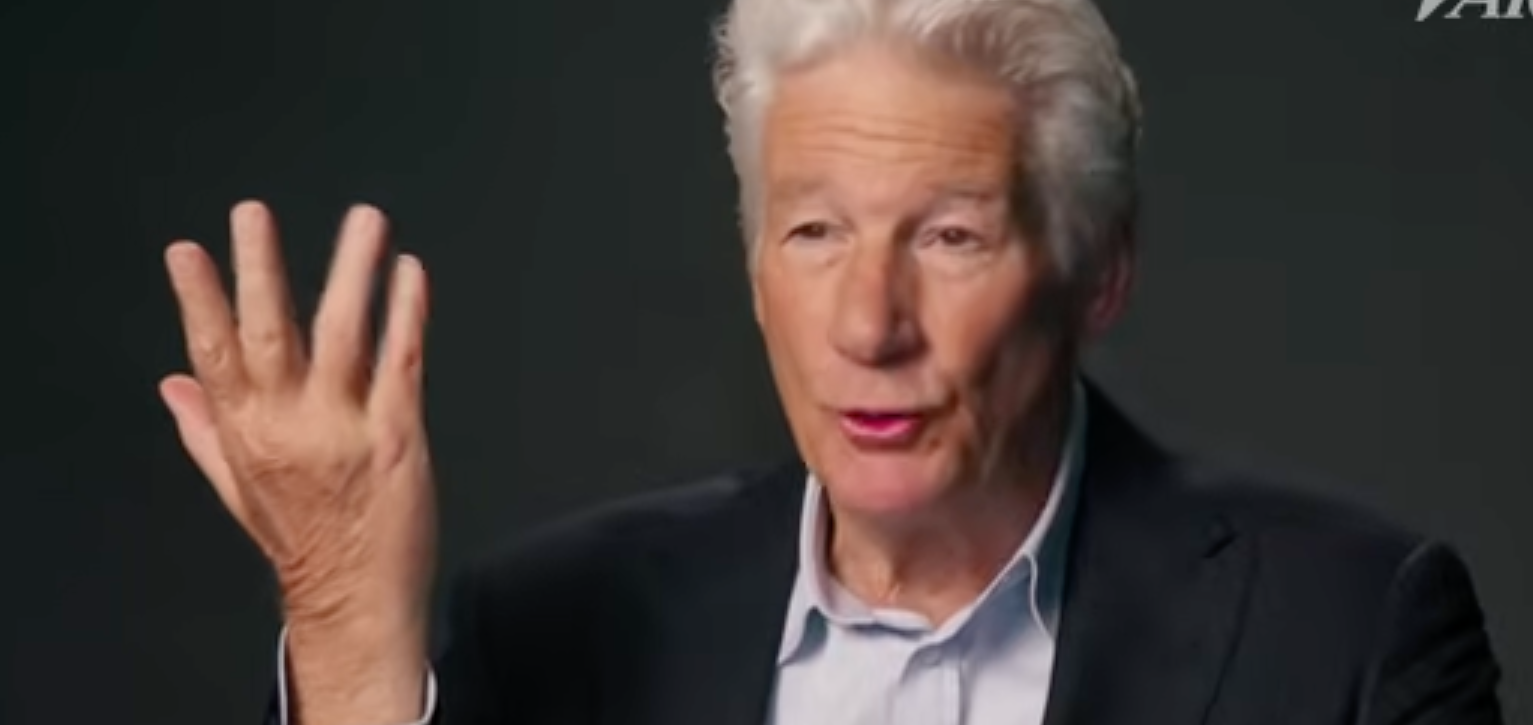
In a rare recent interview, Richard Gere addressed the long-standing ban that kept him away from the Oscars for twenty years — a decision that was imposed after he used his moment on the stage in 1993 to deliver an unscripted political statement condemning human-rights abuses in Tibet. The actor said he does not take the exclusion personally, describing his remarks then as driven not by anger toward individuals but by a desire to challenge injustice.
Gere, now 76, told his interviewer that his decision in 1993 to use the Oscar platform to appeal for compassion and justice aligned with his long-time friendship with Dalai Lama and his lifelong activism on behalf of Tibetan rights. He said that his intention was always to “harm anger,” not people — to challenge exclusion and human-rights abuses — and to remain true to the values of dignity and empathy he associates with the spiritual leader. He added that he did not view the Academy’s consequences as a personal attack, and said he harboured no ill will toward those involved in barring him.
The ban originated at the 1993 Oscars ceremony. Gere — then presenting the award for Best Art Direction — veered off his prepared remarks and publicly called out what he described as “a horrendous, horrendous human-rights issue” in Tibet. He appealed to Chinese leader of the time, urging withdrawal of troops and freedom for the Tibetan people. The remarks were deemed controversial and led to what became effectively a 20-year exclusion from Academy ceremonies. During that period, Gere did not appear on the Oscars stage.
The actor resurfaced at the Oscars in 2013, appearing to introduce musical performances, and co-presenting awards, signalling a restoration of his standing with the Academy. Nonetheless, in the years since, he has seldom featured at Academy events — a fact often attributed to his selective choice of smaller, character-driven films rather than mainstream blockbusters.