
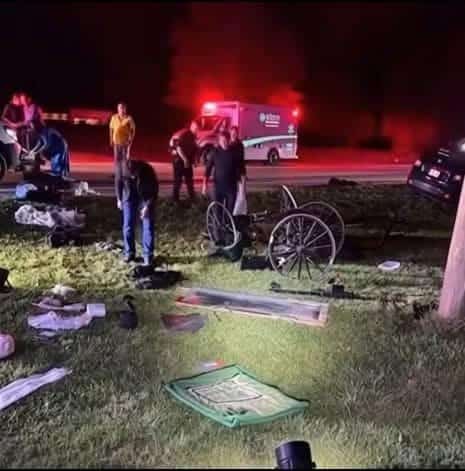
The peace shattered in a single, violent instant. Sirens tore through the darkness, racing past quiet fields as word spread that an Amish family’s buggy had been struck by a Jeep on State Road 218 near Berne. Children were injured. A father was airlifted. Mothers wept. Neighbors hurried from their homes—not to watch, but to pray, to help, to carry what sorrow they could share.
Under the harsh wash of emergency lights, the roadway told a story no one wanted to see: splintered wood, scattered belongings, a silent buggy that had only hours earlier carried a family of nine. In the aftermath, the community did what it has always done best. Church members stayed through the night with relatives. Meals appeared quietly on doorsteps. Farmers offered rides, childcare, and steady presence—without announcements or expectation.
As investigators work to understand how a Jeep and a horse-drawn buggy came together so tragically on a rural road, another kind of work has already begun. It is slower and less visible: the tending of bodies and spirits. Local leaders are urging patience, caution, and respect on shared roads, reminding drivers that these routes carry lives moving at different speeds.
In Berne, grief has not fractured the town. It has drawn people closer—turning a night of fear into a renewed commitment to look out for one another. In that closeness, the community affirms what endures when peace is broken: care that arrives quietly, faith that steadies, and a resolve to protect the vulnerable who share the road home.