
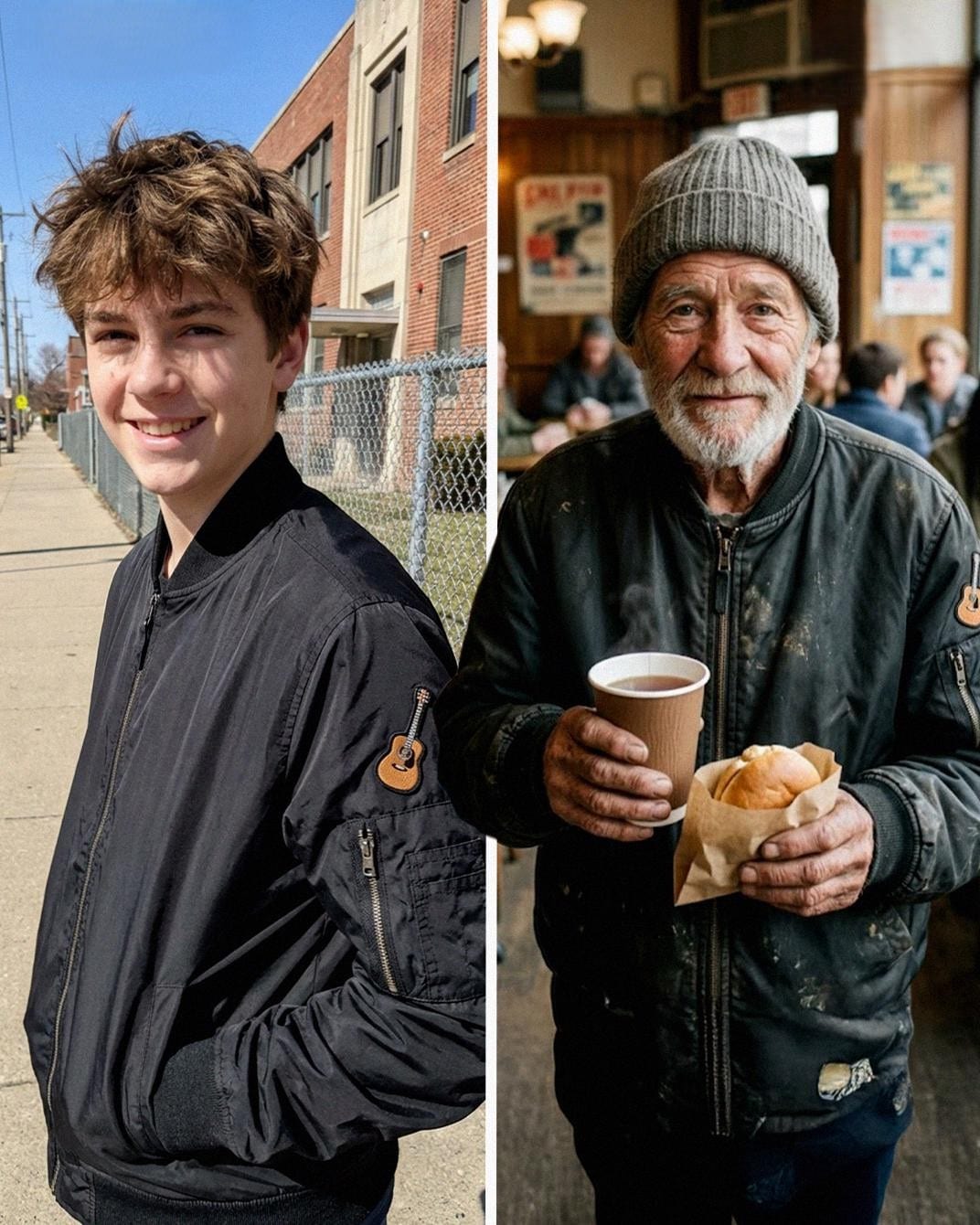
The last time I saw my son, Daniel, he was standing in the hallway tying his sneakers, his backpack hanging off one shoulder like he was already halfway out the door.
“Did you finish the history assignment?” I asked from the kitchen.
“Yes, Mom,” he said, grabbing his jacket. Then he leaned down, kissed my cheek, and smiled the way he always did when he was in a hurry. “See you tonight.”
I watched him walk down the street through the living room window, his shoulders slightly hunched against the cool morning air.
That was the last normal moment I had with him.
At first, I told myself there was a simple explanation. Sometimes he stayed after school to play guitar with friends. Other days he wandered to the park until it got dark. He usually texted when he did that, but maybe his phone had died.
I repeated that to myself while cooking dinner. While eating it alone. While washing the dishes and leaving his plate in the oven to keep warm.
But when the sky turned dark and his room was still empty, a quiet, terrible feeling began to grow inside me.
I called his phone. Straight to voicemail.
By ten that night, I was driving around the neighborhood, headlights sweeping across empty sidewalks.
By midnight, I was sitting in a police station filling out a missing person report.
The officer behind the desk asked questions calmly, writing everything down.
“Sometimes teenagers leave for a few days,” he said gently. “Arguments with parents, that sort of thing.”
“He’s kind,” I said, my voice shaking. “He’s the kind of kid who apologizes when someone bumps into him.”
The officer gave me a polite smile, the kind meant to reassure worried parents.
He thought I was another panicked parent who didn’t really know their own kid.
The next morning, I went straight to Daniel’s school.
The principal was sympathetic. She let me sit in a small office and watch the security camera footage from the previous afternoon.
Students poured out of the gates in loud clusters—laughing, shoving each other, checking their phones.
For a second, I didn’t recognize her. Then she turned her head slightly, and I saw her face clearly.
She had come over to our house a few times. Quiet girl. Always polite, almost careful with her words.
In the footage, they walked together to the bus stop.
Then they disappeared from the camera frame.
“I need to speak with Maya,” I said to the principal.
“Maya doesn’t attend this school anymore,” she said. “She transferred yesterday. That was her last day here.”
A man answered the door. Tall. Hard expression.
“Can I please speak to Maya?” I asked. “She was with my son yesterday. He’s missing.”
Then something in his face shut down completely.
“Maya isn’t here,” he said. “She’s staying with her grandparents for a while.”
“I’ll ask her if she knows anything,” he added flatly.
I stood there for a long time, something in my gut telling me that conversation had been wrong somehow—but I didn’t know how to push further.
The weeks that followed were the worst of my life.
We hung flyers everywhere. Posted in online groups. Called everyone Daniel knew.
The police searched too, but slowly the energy faded. The calls slowed. The reports stopped.
Daniel wasn’t the kind of boy who disappeared without a word.
I forced myself back into something that resembled normal life—work meetings, grocery shopping, quiet Sunday calls with my sister.
Then one afternoon, while I was in another city for a meeting, I stopped at a small café.
I ordered coffee and waited at the counter.
When I turned, an older man had just stepped inside. His coat was worn and thin, his hands full of coins he was counting carefully.
I recognized it instantly because of the guitar-shaped patch on the sleeve. Daniel had torn it on a fence months before, and I’d stitched that patch on myself.
There was also a faint paint stain across the back from when he helped a neighbor repaint a shed.
“Add that man’s tea and a bun to my order.”
The man looked at me with surprise. “Thank you, ma’am.”
“Where did you get that jacket?” I asked.
People moved between us while the barista handed him the tea and bun.
When I pushed past them, he was already heading toward the door.
But he stepped outside and into the crowd.
I followed him down the street, trying to catch up.
After two blocks, something strange occurred to me.
Not for food. Not for change. Not for anything.
So instead of calling out again, I slowed down and followed him.
Eventually we reached the edge of the city, where abandoned houses stood like tired ghosts beside the woods.
The yard was overgrown with weeds. The paint had peeled away from the walls. It looked forgotten.
“You said I should tell you if someone ever asked about the jacket…” the old man said.
And when I saw who was standing in that doorway, my knees nearly gave out.
For one second his face lit up with shock.
Then he did the last thing I ever expected.
I burst through the kitchen just in time to see Daniel and a girl sprinting out the back door into the woods.
That night I drove straight to the nearest police station.
“I found him,” I told the officer. “He’s alive.”
The officer frowned. “Why would he run from you?”
“I don’t know,” I said. “But please help me find him before he disappears again.”
Hours later, just before midnight, the officer came back.
“We found him near the bus terminal,” he said.
Relief flooded through me so hard my hands shook.
They brought Daniel into a small interview room.
The moment I saw him, tears started running down my face.
“You’re alive,” I said. “Do you know how worried I’ve been? And when I finally found you… why did you run?”
“I didn’t run from you,” he said quietly.
In the weeks before he disappeared, Maya had confided in him.
Her stepfather had been growing angrier, unpredictable. Yelling every night. Breaking things.
“She said she was scared,” Daniel told me.
I remembered the man who answered her door.
“He lied to you. She never went to her grandparents.”
One day Maya came to school with a bag packed.
“She said she was leaving that afternoon,” Daniel said.
“Why didn’t you call me?” I asked softly.
“Because I promised her I wouldn’t tell anyone where we were. She thought if someone found us, they’d send her back.”
“I was afraid the police would find her.”
“Then what about the jacket?” I asked. “You told that man to watch for someone asking about it.”
“I thought… maybe if someone recognized it… they’d know I was alive.”
“I didn’t want you thinking I was gone forever.”
After speaking with her privately, the full truth came out. An investigation was opened, and her stepfather was removed from the home.
For the first time in a long time, Maya was safe.
Weeks later, I stood in the doorway of my living room watching Daniel and Maya sitting on the couch.
They were watching a movie. A bowl of popcorn between them.
For almost a year, I believed my son had vanished.
But he hadn’t run away the way everyone assumed.
Through every shelter, every cold night, every abandoned building.
Because Daniel was the kind of boy who couldn’t let someone face the world alone.
He was also the kind of boy who left a trail for someone who loved him to follow.