
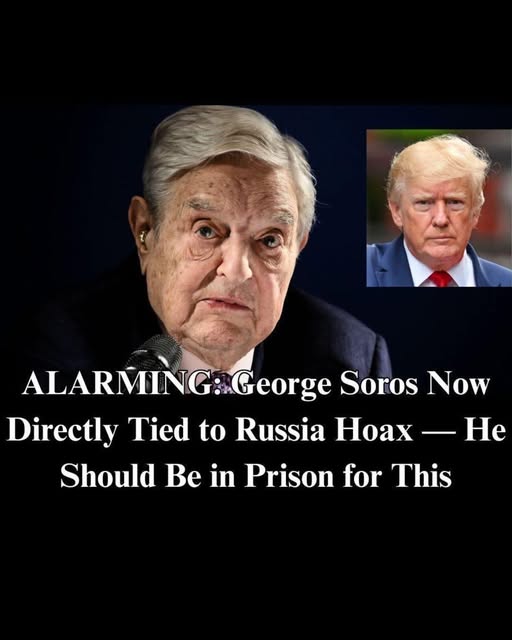
A dramatic image has been circulating online claiming that George Soros is “directly tied to the Russia hoax” and that he should be in prison because of it. The language is explosive, the implication severe, and the reaction predictable. But when the headline is stripped of emotion and examined carefully, the story it suggests does not hold up in the way many posts want readers to believe.
The phrase “Russia hoax” itself is a politically loaded term that has been used for years to describe investigations into Russian interference in U.S. elections. Those investigations involved intelligence agencies, congressional committees, special counsels, and the courts. They did not conclude that George Soros orchestrated or controlled them. Despite this, Soros has repeatedly been pulled into viral narratives as a symbolic villain because of his wealth, political donations, and support for progressive causes.
What fuels these claims is not newly uncovered evidence, but recycled accusations. Online posts often blur the line between funding advocacy groups, supporting political reform, and directly controlling government investigations. Supporting organizations that promote certain policies is not the same as directing law enforcement actions or fabricating evidence. No court ruling, criminal indictment, or official finding has determined that Soros committed crimes related to Russia investigations.
The reason these stories spread so quickly is because they fit an existing narrative many people already believe. Soros has become a stand-in figure for broader distrust of elites, globalism, and political power. Attaching his name to any controversial event instantly amplifies outrage, even when the connection is vague or nonexistent. Headlines are written to provoke reaction, not to reflect legal reality.