
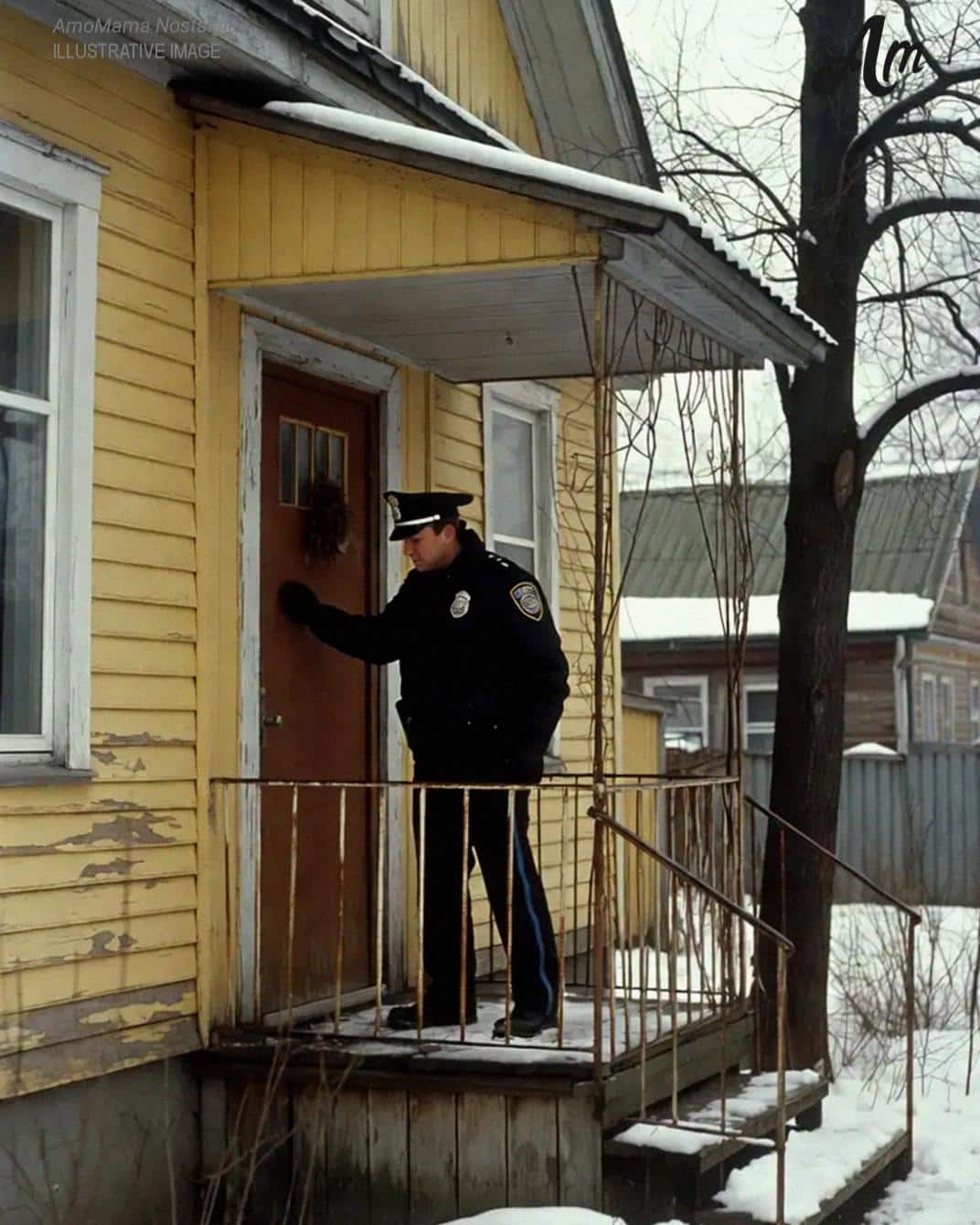
The sound was sharp and final — wood splitting against something hard. It echoed down the quiet street and straight into my chest.
“Jack,” he said firmly, already moving, “open the door. Now.”
The crack was followed by a muffled thud. Then silence. The kind of silence that makes your ears ring.
I was standing halfway down my front steps, my heart pounding so loud I thought I might faint. My hands shook against my cardigan.
“Officer…” I called out, my voice thin. “Please.”
Murray stepped back, hand on his radio. “Dispatch, I need backup at—” He rattled off the address. “Possible child endangerment. Forced confinement.”
“Jack!” he called again, louder this time. “If you can hear me, get away from the door.”
The door gave way with a splintering crack, swinging open hard enough to hit the wall.
Stale air. Something sour. Something old.
Murray moved in fast, scanning left and right. “Jack?” His voice was calm but urgent. “It’s okay. I’m here.”
I hovered on the porch, unable to move, my heart in my throat.
Jack was crouched near the hallway, arms wrapped around his head, shaking so hard his teeth were chattering. A red mark was already forming along the side of his face.
A tall man, unshaven, eyes glassy, hand still clenched around a broken wooden board — the source of the crack.
The man laughed. Actually laughed. “Kid’s a liar,” he slurred. “Always crying. Always whining.”
Murray didn’t raise his voice. He didn’t need to. “Put. It. Down.”
Backup arrived within minutes. Red and blue lights flooded the street, reflecting off my windows, my roses, my memories. The man was cuffed, shouting excuses the whole way out.
Those words lodged themselves inside me like glass.
Jack was wrapped in a blanket by a paramedic, sitting on my porch now, his small hands clutching the fabric. When he looked up and saw me, his eyes filled with tears.
“I’m sorry,” he whispered. “I didn’t mean to get anyone in trouble.”
I sat down beside him, slow and careful, and put my arm around his shoulders. He stiffened at first, then leaned in like he’d been waiting years for permission.
“You did the bravest thing,” I said softly. “You survived.”
Officer Murray knelt in front of us. “Jack, where is your mom?”
Jack swallowed. “She left two months ago. Said she’d be back in a week. She told him to ‘watch me.’”
I felt something in me harden — not into anger, but into resolve.
That night, Jack didn’t go back inside that house.
The social worker said it was temporary. Just until things were “sorted out.”
But temporary turned into days. Then weeks.
Jack slept in my grandson’s old room — the one that had sat empty for years, dust gathering on forgotten trophies and faded posters. I washed the sheets twice, aired the room, made it warm.
The second night, he cried in his dreams.
The third night, he slept through until morning.
I made oatmeal. He made faces about it but ate every bite. I walked him to school with my cane tapping beside his skateboard. He waited for me after class, never running ahead.
One afternoon, while we were doing homework at my kitchen table, he looked up and asked, very quietly, “Why did you help me?”
“My husband used to say,” I told him, “that loneliness makes noise if you listen closely. I heard yours.”
The authorities tried to locate his mother. Letters were sent. Calls were made. No response.
“Mrs. Adler,” the caseworker said gently, “would you consider being his guardian?”
I laughed at first. Ninety-one. Arthritic. Slow.
Then I looked at Jack, bent over his homework, tongue sticking out in concentration.
The paperwork took time. The adjustments took patience. But something miraculous happened in that house.
Jack brought noise. Skateboard wheels on the sidewalk. Music too loud. Questions at all hours.
And in return, I gave him things I still had plenty of.
Time. Attention. Warm dinners. A place where crying wasn’t punished.
Then — unbelievably — my granddaughter showed up on the porch one afternoon, awkward and apologetic.
Jack watched it all quietly, then later asked, “Are they coming back now because of me?”
“No,” I said. “They’re coming back because they remembered who they are.”
On his thirteenth birthday, Jack baked me a cake. It leaned a little. The frosting was uneven. It was perfect.
Thank you for hearing me when no one else did.
At ninety-one, I thought my life was winding down.
Sometimes family doesn’t forget you forever.
Sometimes… they just take a very long way back.
And sometimes, the sound that changes everything isn’t laughter or celebration.
It’s a child crying in the dark — and one person brave enough to listen.