
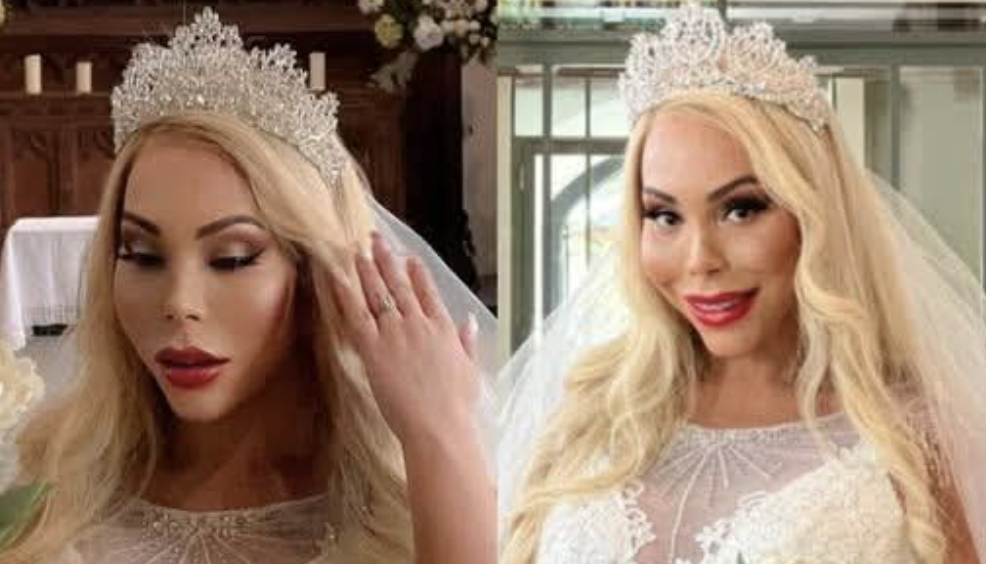
Brazilian-born influencer Suellen Carey, who attracted global attention last year for marrying herself in a symbolic ceremony in London, has confirmed that she is ending the unusual union after concluding that self-marriage left her exhausted and lonely. The 36-year-old digital creator, known online for glamorous fashion content and for working as a Mariah Carey impersonator, said the decision followed months of reflection and a series of therapy sessions that she attended alone in an effort to save the relationship.
Carey’s “sologamy” wedding took place on 21 September 2023 at a venue in the British capital, where she lives. Images shared on her Instagram account showed her in a white wedding dress surrounded by flowers, posing in central London and in a decorated indoor setting. In a caption at the time she wrote that she valued and loved herself and described the event as one of the happiest days of her life, saying the celebration marked a decision to prioritise her wellbeing and mental health.
Her self-marriage was framed as a declaration of self-love after years of struggling to find a partner. In interviews she has said that she saw the ceremony as a way of formalising a commitment to herself, telling the Mirror that the marriage represented a process of “healing and self-discovery”. According to that interview, she believed that analysing her own behaviour and feelings was essential, and she spoke about the importance of knowing when to end a “cycle” that is no longer working.
Within a year, however, Carey concluded that the symbolic marriage could not be sustained. She told the tabloid that expectations she had placed on herself became overwhelming and that she frequently felt drained. She said she realised she was putting a lot of pressure on herself and that even a commitment to one’s own wellbeing can be challenging when it is tied to an ideal of being “perfect” all the time. Reports quoting the interview state that she acknowledged feeling lonely on many occasions and eventually decided that it was time to “open [her] heart to new possibilities”, including the prospect of a conventional relationship with another person.
Before reaching that point, Carey attempted to repair the relationship in ways that mirror traditional couples’ efforts to save a troubled marriage. She has said that she attended around ten sessions of couples therapy on her own, explaining to reporters that she wanted to give the commitment “every chance” to succeed. According to coverage based on her comments to the Mirror, the therapy was aimed at addressing her dissatisfaction and the persistent sense of isolation she felt while being formally “married” only to herself. In the end, she decided that the counselling reinforced her conclusion that her solo marriage had run its course.
Carey’s decision to divorce herself comes against a wider backdrop of increasing discussion of sologamy, a practice that has been reported in several countries over the past decade. The term usually refers to a symbolic ceremony rather than a legal status and is often framed as a statement of independence or self-respect rather than a rejection of future relationships. Commentators have noted that some women who choose sologamy present it as an answer to the pressure to wed by a certain age, while others describe it as part of a personal journey after difficult break-ups or long periods of feeling undervalued.
London woman who married Herself last year files for divorce
Influencer Suellen Carey, who made headlines by marrying herself in 2023, is now filing for divorce 😢.
Despite her efforts to make it work, including attending therapy sessions, she couldn’t save the marriage pic.twitter.com/uS7f4uR8bl — Aphelele Jody (@ApheleleJody) September 16, 2025
Carey fits that profile in some respects. Born Suellen Roberta de Assunção Miranda in Belo Horizonte, Brazil, she is a transgender woman who has spoken in Brazilian media about overcoming prejudice and building a career that allowed her to live openly. She moved to the United Kingdom and established herself as an influencer focusing on fashion, beauty and luxury lifestyle content, building an audience of hundreds of thousands of followers across platforms. She also developed a sideline as a Mariah Carey tribute performer, booking appearances at events while continuing her online work as a digital creator.
Her self-wedding in London in 2023 drew coverage in British and international outlets, which highlighted both the elaborate nature of the ceremony and her explanation that the event celebrated self-esteem. In images and video clips shared online, Carey appeared in a floor-length gown and veil, posing with a bouquet and exchanging vows with herself. She said in posts at the time that she hoped to inspire others to look after their own mental health and to treat themselves with the same care they might offer a partner.
Reaction to the announcement that she is seeking a divorce from herself has also played out largely on social media. Coverage of her comments to the Mirror has been widely shared by celebrity news accounts on Instagram and X, prompting a mixture of amusement, scepticism and sympathy. Some users have treated the story as an example of online stunt culture, while others have focused on the underlying themes of loneliness and mental health that Carey herself has emphasised. Reports citing social media responses describe users joking about alimony and division of assets, alongside more serious comments suggesting that her experience highlights how self-imposed expectations can become damaging.
In a story post sharing one of the reports about her divorce, Carey wrote that she “need[s] a new husband”, adding emojis that indicated she was joking about the situation. That light-hearted remark contrasted with her more serious assessment of the strain the solo marriage had put on her. She has spoken about the contradiction between presenting a glamorous, confident image online and privately struggling with the demands she placed upon herself as both partner and spouse. According to accounts of her comments, she came to feel that the attempt to embody an ideal of constant self-love and perfection was unsustainable.
Despite calling off the self-marriage, Carey has insisted that she does not regret the decision to go through with it. She has said that the experience helped her understand herself better and served as a catalyst for personal growth. In interviews quoted by several outlets, she described the period as a “process of healing” that allowed her to confront issues around self-worth and identity. She now argues that the end of the marriage is simply another stage in that same journey, presenting the divorce as evidence that people are allowed to change direction when something no longer serves them.
Carey has also pointed to the lessons she believes her experience holds for others considering symbolic acts of self-commitment. She has warned that such gestures can become performative if they are not rooted in realistic expectations and ongoing support. Her comments suggest that she underestimated the emotional toll of maintaining the narrative of a perfect relationship with herself, particularly while working in an industry that rewards polished images and public declarations of happiness. She has said that part of her decision to seek a symbolic divorce was an acknowledgment that she needed space to feel vulnerable and imperfect rather than constantly projecting strength.
In the months since announcing the end of the self-marriage, Carey has signalled that she is open to conventional romance. She has been quoted as saying that it is “time to open [her] heart to new possibilities”, including the chance to find a partner. In a separate video reported by British and South African outlets, she said that after the divorce she received a large number of messages and marriage proposals from viewers around the world, which she described as unexpected but flattering. She has framed her current position as one of cautious optimism, stressing that any future relationship would need to be grounded in the self-knowledge she gained from her period of sologamy.
Carey’s story has unfolded at a time when social media influencers routinely share intimate details of their personal lives with large audiences, blurring the line between private experience and public performance. Her decision to both marry and divorce herself in such a visible way has raised questions among some viewers about authenticity, mental health and the pressures of online visibility. Yet in her own account, the story is less about spectacle and more about an attempt to reconcile self-love with honest recognition of her limits. She has repeatedly stressed the importance of being able to admit when something that once seemed empowering is no longer healthy.
For now, the influencer appears keen to move on while keeping control of the narrative. Her main Instagram feed continues to feature professional photographs, fashion content and glimpses of her life in London, with the self-marriage and divorce woven into that broader image rather than dominating it. As discussion of sologamy continues in opinion columns and online forums, Carey has presented her own experience as both a celebration of independence and a reminder that even symbolic commitments can carry emotional weight. Her decision to end her self-marriage after a year underscores, in her telling, a simple conclusion: that self-respect sometimes means knowing when to let go, even when the person you are leaving is yourself.