
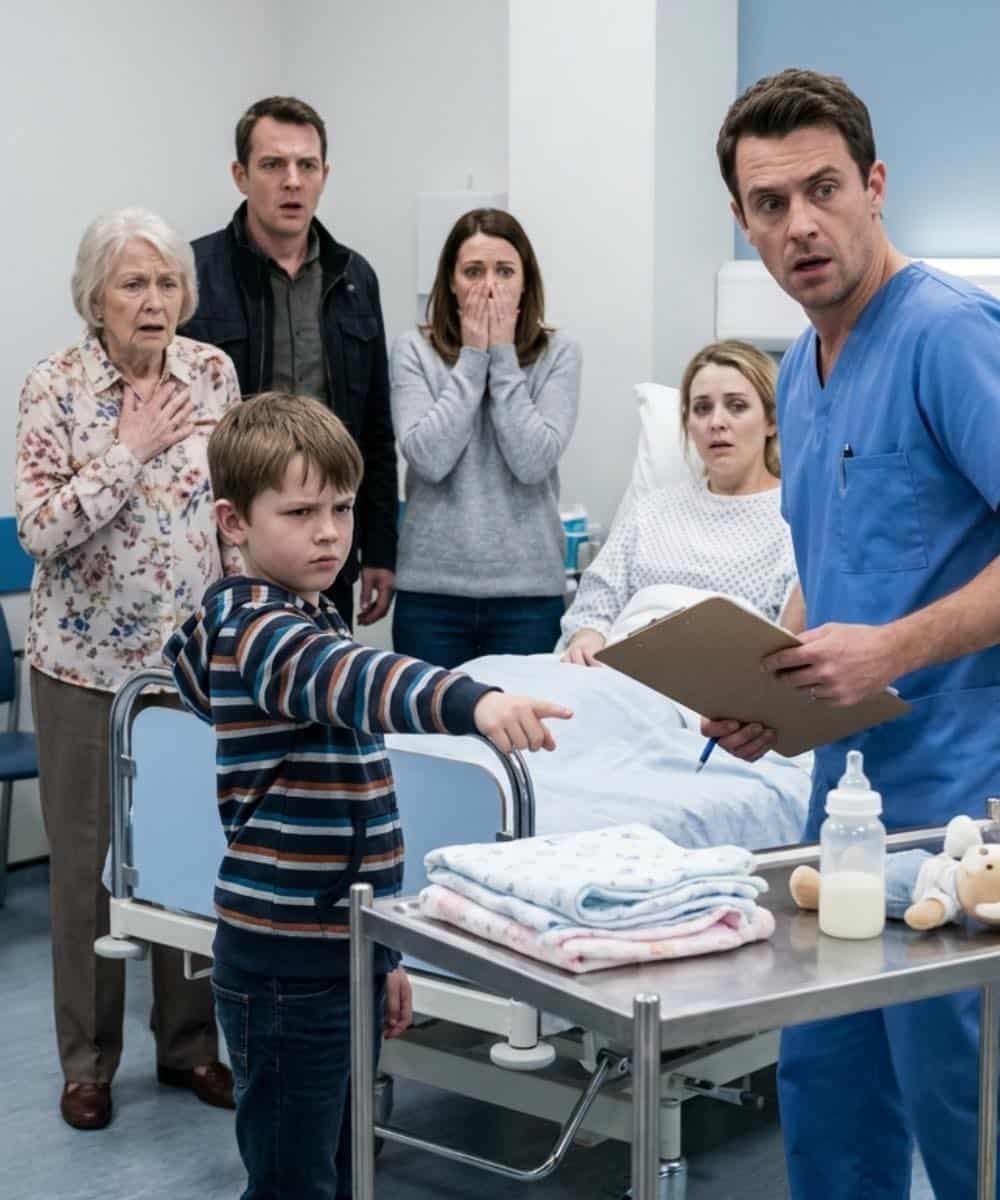
The hospital shifted in a way I had never felt before.
Not panic. Not chaos. Something colder than that—focused, deliberate. A silence that didn’t freeze but moved, fast and purposeful, like a storm made of restraint.
Phones began ringing behind closed doors. Security appeared at the entrance without being called. Within minutes, a police officer arrived. Then another.
Margaret was taken into the hallway first. She shouted prayers tangled with accusations, her voice sharp and echoing as officers guided her away. Claire followed, crying, insisting it was all a misunderstanding, that no one meant any harm. Daniel didn’t move at all. He stood where he was, hands shaking, saying my name over and over like he was trying to remember who I had been to him.
I watched everything from the hospital bed, detached from my own body. My heart slammed against my ribs so hard it felt dangerous, like it might break something inside me.
They documented my statement with calm, practiced voices.
The toxicology report came back with brutal speed.
The substance found in the milk wouldn’t have harmed an adult. But for a newborn—especially one only hours old—it was lethal. A prescription medication Margaret had taken for years. Crushed. Measured. Mixed deliberately.
Margaret said she had been “protecting the family.”
She said my history of depression meant I would destroy another child.
She was arrested that night. By morning, the charge was murder.
Claire was questioned for hours. Eventually, she admitted she had seen her mother near the bottle. She admitted she had said nothing. That silence carried consequences—accessory after the fact.
Daniel collapsed during questioning. He told investigators his mother had warned him not to marry me. He said she talked about “tainted genetics,” about destiny and divine judgment. He said he should have stopped her. He said he had known she was capable of something like this.
And in that moment, something settled inside me with terrifying clarity.
He died because the people closest to him decided he shouldn’t exist.
Later that night, a hospital social worker sat with Noah and me. She told him he was brave for speaking up. She praised his honesty, his courage.
He only asked if his baby brother was cold.
An internal review showed the nurse had stepped away for less than two minutes. That was all it took.
Within days, the story was everywhere. News vans lined the street. Headlines spread faster than facts. Comment sections filled with strangers debating religion, morality, and evil as if those were abstract ideas instead of the reasons my child was dead.
Daniel moved out the following week. I didn’t ask him to stay.
I couldn’t look at him without remembering that his back had been turned when it mattered most.
Margaret never cried for Evan. Not once. She cried for her reputation. For her standing. For what people would think.
She was sentenced to life without parole.
Daniel signed the divorce papers quietly, eyes hollow. He asked once if I thought I could ever forgive him.
I told him forgiveness and trust were not the same thing.
Noah and I moved to another state. New routines. A new school. A small house with a backyard where sunlight reached the grass in the afternoons.
He still talks about Evan. About how he would have taught him to ride a bike someday. I let him talk. I never ask him to stop.
Sometimes I think about what would have happened if Noah hadn’t spoken.
I began volunteering with hospital advocacy groups—working on policy changes, pushing for stricter access control in maternity wards. Evan’s name is printed on one of those policies now.
Daniel sends birthday cards. I don’t answer them.
Margaret writes letters from prison. I don’t open them.
And every time I see a nurse’s cart rolling down a hallway, I remember the moment an eight-year-old boy told the truth—even when it was already too late to save his brother.